I was chatting with my friend Joe yesterday about how Pulitzer Prize winners are so consistently good. Demon Copperhead is no exception. Barbara Kingsolver is certainly among the greatest living authors in America today and in this book she gives her home region of Appalachia the careful and delicate literary treatment it deserves.
Kingsolver’s retelling and re-setting of David Copperfield in Southwestern Virginia in the early 2000s, just when the Sacklers were conjuring their opiates and the arguments to get the public addicted to them hit the hardest.1 One character, a pharma rep from Purdue, makes the case that pain is the sixth receptor and therefore, I guess, you should take these medications to block it? These were real arguments the pain lobby and pharma reps made. It’s astonishing to me that the pain lobby still defends this behavior and their role in the opioid crisis.
But predation on the vulnerable is not the driver of this book, nor is it even the main villain. Kingsolver is going for, as Demon might put it, the whole banana. It’s a comprehensive and emotive window into how a young person can be vacuumed into a life marred by vulnerability from an early age. Demon is 11 or younger throughout most of this book. He’s set up with foster families that clear the low bar of “safe” by simply not beating their fosters. Yet he already endured an entire lifetime before he even reaches high school.
Poverty porn is a real phenomenon, but not what this book is. One of Kingsolver’s gifts as a writer is to not allow the reader to get away with thinking that every person or child in the South suffers from addiction, or experiences hunger or deep poverty, or even that any child anywhere has the same experience as Demon’s. Neither does she draw characters that are not full humans with agency, compassion, and emotion. Reading this book helps you to understand how any person could become addicted to opioids as a high school freshman; how a person could become pregnant in middle school; or how entire communities could come to distrust institutions. It helps you understand how someone can live with addiction, see paths out, but make intentional choices not to take them. At no point does Demon ask for pity nor rescue. Instead, he demands only your attention, and the same measure of compassion he shows the people in his life.
This book is nearly 600 pages long, but not a slog. It’s a page turner that hurts your hands a little to hold. It wakes you up in the morning, begging to be read; distracts you from work, parenting, life, in order to keep showing up for Demon. It’s also, at times, very funny. I wanted to be reading it with someone else because I was so eager to talk to someone about what happened, and what might be coming, to Demon Copperhead.
There’s a Milwaukee folk rocker named Trapper Schoepp. He shared his experience surviving addiction at a show we attended two Christmases ago. After that he played a song called Satan is Real (Satan is a Sackler). It is on his latest release, Osborne, and I found myself thinking about it as I read certain parts of this book. Highly recommend both.
As many other (read: professional) reviewers noted, you do not need to have read or remember anything about Copperfield to read and enjoy this book. ↩︎
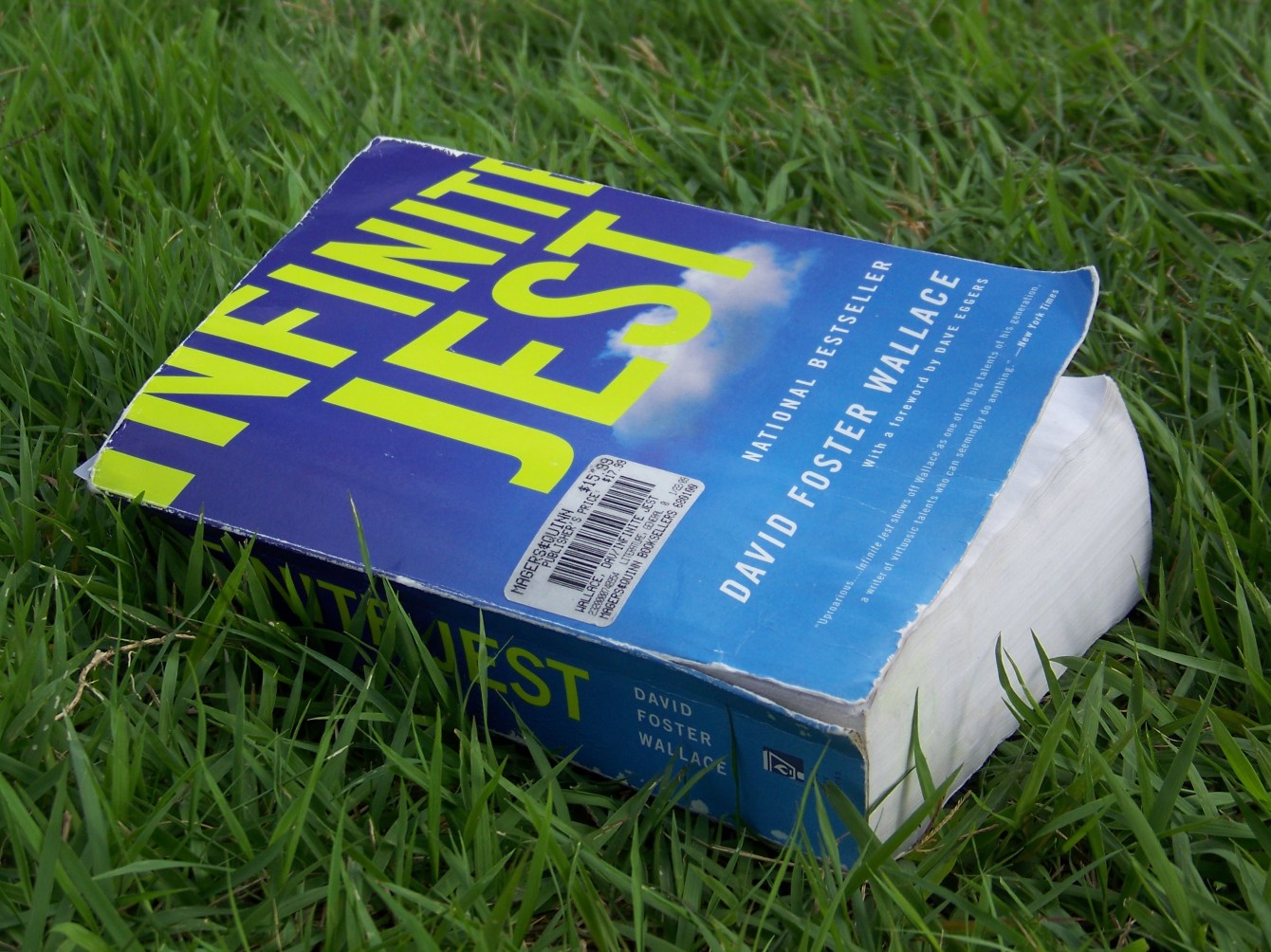
Hermione Hoby has a piece in the New Yorker this month called “Infinite Jest has turned 30. Have we forgotten how to read it?” I recommend people go read it if they’ve ever seen Infinite Jest on someone’s bookshelf and thought “that’s a funny looking bible,” or “what kind of dictionary is that,” or “oh that kind of reader lives here,” or “when will I ever have time to read a thousand page book, must be nice,” or “I bet they’ve never actually read it.”
I read Infinite Jest and I did enjoy it but, unlike Hoby, probably won’t read it again. I was 22 when I started it and 23 — almost 24 — when I finished it. I remember feeling a sense of accomplishment when I finally finished it. The book itself is almost like a game. It’s not a book you can sit down and read for 20 minutes before bed, because you might, in the middle of a paragraph, be taken to an endnote that is the entirety of a Hal Incandenza essay for his English class at Enfield Tennis Academy.
I think this is why Hoby’s essay resonated so well with me. The book’s physicality is a rhetorical act. It represents a challenge to readers to engage deeply with culture, to read fiction and do it by putting your whole self in the book. It wasn’t easy in 1996, and it hasn’t gotten easier with the likes of TikTok, Instagram, X (and twitter before it), etc. With Infinite Jest, DFW says to readers: Here. I made this book specifically to train you to break free of those attention sinks. Someone who needs that liberation is the kind of person who should consider reading Infinite Jest or, as Hoby notes, any of a number of others that approach the same literary challenge.
The ICYMI podcast had an episode recently on “Friction-maxxing,” a term I kind of dig. I guess? The idea is you intentionally make it harder to use social media or other attention sucking brain rot sources. (I use Wisconsin company Brick‘s gadget to do this.) If Friction-maxxing is something you aspire to, Infinite Jest might be a good challenge. You don’t have time for TikTok or Facebook or Bluesky. You need to know what’s going on with Don Gately, Hal, and whether the Les Assassins des Fauteuils Rollents will get their hands on The Entertainment!
PS: For fun, here’s a photo of me reading the book in a park in South Korea in 2009, one hand holding the place for the endnotes.
What happened in Minneapolis a few weeks ago is an outright tragedy. Ten times as many agents as were deployed to Chicago. Neighborhoods invaded by armed, masked agents. Firearms and chemical agents deployed at schools. It’s sickening enough and needed to stop long before Alex Pretti, Renee Good, and others were killed by these agents.
This community doesn’t deserve this shit. No community does.
The people with the power to dispatch these agents have done nothing to make these communities safer. Indeed, they and their defenders neglect the basic humanity, liberty, and civil rights of the victims.
At the time of Minnesota’s concealed carry law, there was a opponents of the legislation largely assumed good faith: Its supporters simply had a different, genuine, perspective about how to solve a problem. It certainly seems like the people who made those arguments 23 years ago have suddenly reversed course.
Or maybe not so suddenly. Several police-involved shooting victims were executed on the premise that they had a gun (Philando Castile) or other arms (George Floyd had a knife) legally on their person — not brandished, stowed. All of the defenders of police in these shootings conveniently forget that law enforcement, especially federal, is the government. Killing a suspect is extra-judicial execution! Is this not exactly the kind of tyranny an armed public is meant to protect us from?
Pretti was not detained, yet he was disarmed. He was disarmed, yet he was nonetheless executed. Where are the 2A supporters rushing to defend this law-abiding citizen’s civil rights?
They’re nowhere.
Steven Miller called him an assassin. Greg Bovino said he needed to be executed because he wanted to “massacre law enforcement.” (Pretti had his hands up before he was taken down.)
If they had an ounce of courage, they’d demand investigations about unlawful search-and-seizure of a lawful citizen’s firearm by the federal government.
They’d insist on cooperation with Minnesota’s Bureau of Criminal Apprehension to understand how the state’s law was broken.
They’d mobilize their base in defense of the summary execution of someone exercising his 2nd Amendment rights.
None of this has happened.
None of that will happen because all of the people with the power to do it are cowards for whom Constitutional rights only apply to people who use them correctly. They seek only to preserve their own power through fear and coercion.
I don’t think “more guns” is a solution to any problem, or that the 2nd Amendment gives an unlimited personal right to possess firearms.
If it were up to me, ICE and Border Patrol agents wouldn’t be allowed to carry them for most operations. Police wouldn’t be permitted to carry them for most routine house and welfare calls. We’d have ongoing buy-back programs to get unwanted and illegal weapons off the streets.
For their part, the Democrats could do more than send a fucking text message. They should be in the streets, demanding justice, and showing the public a better way forward. Some are doing this, too many are not.
If you want to see courage, go to the streets of Minneapolis and ask how you can help.
If you didn’t know, NASA is sending Artemis II to orbit the moon in early February. Like most missions, they’re sending a kit of artifacts along with the crew and cargo, including an SD card with a file containing the names of people around the world who signed up with NASA.
It’s a refreshingly simple form. It asks for a first name, last name, and 4 to 7 digit PIN. There’s no disintermediation of the experience by a third party contractor, no newsletter, or subscription required. It’s an invitation to participate in and educate yourself about a landmark government science project. Nothing more.
We moved to Milwaukee in 2019 and one of the first museums I learned about was the National Bobblehead Museum. It was later featured in one of the Top Chef episodes set here. I still hadn’t been until this week. Matt gave the whole company a homework assignment to visit a museum to elevate our craft through exposure to culture.
Originally I thought I’d use it as an excuse to visit MAM, a short ride on the Hop from my co-working space. But, the more I considered the prompt, I decided to go somewhere I’d never been before. The Bobblehead Museum is a small one perched above the Colectivo on S 1st St in Walker’s Point. It is the largest collection in the world and educates visitors about the history and cultural relevance of “nodding-head toys.” (They’ve been around since at least the 1700s!)
The museum was started by a UW Milwaukee grad who began collecting them after he worked for the Rockford Riverhawks. Today, they have a copy of “The Overcoat,” the first known text to reference “plaster cats which wag their heads.” And the museum does, in fact, have some feline bobbleheads. From the tiniest to the 6 foot tall museum mascot, everything but the shelves they sit on is a bobblehead. One of the docents confirmed: If it doesn’t bobble, it’s not on display.
It’s one of those museums that can only exist in one place and offers a glimpse at a specific piece of culture. I’m glad that one place happens to be right here in Milwaukee. If you ever visit, bobble on in.
I just finished Kevin Wilson’s novel Now is Not The Time to Panic, a book I truly couldn’t put down. The book centers around this strange phrase clipped in the title of this post. It means… almost nothing on its own but to Frankie Budge it means everything. It’s a phrase she invented to create a poster with her first crush, Zeke, when they were both 16. This poster would get plastered across their small town, and its bizarre imagery creates a panic that spreads nationwide. For the artists, though, it fuels a euphoric summer of creativity.
This book is a little like the White Stripes song “Little Room.” It’s quick. It seems kinda silly but also deeply serious to the characters involved. Kevin Wilson captures teenage boredom, self importance, and the fearsome importance of the future injected by all the adults in your life, without writing a standard coming of age story.
This book describes more than the nostalgia of tape decks and pre-internet fandom. It describes a manifestation of panics unique to the time. These kinds of things happened in the 80s, 90s, early 2000s. I remember them. Parents would forbid their children from certain kinds of culture because they had inherent evil properties. Industrial music turned kids into mass shooters. Rap music into criminals. Graffiti artists were bound for gangs and prison. These panics would spread across the country.
This book looks at panics on a smaller level. How do people get it into their head that a weird poster was anything more than a harmless piece of graffiti made by bored teenagers? Wilson intentionally does not answer this question. Instead he just kinda plows into it. His characters are more or less unfazed when the evil things people projected onto their art sometimes happen. The adults are the ones who panicked. The kids are just fiercely loyal to each other and their art.
It’s also funny and well drawn. Frankie has all kinds of ideas about how sneaky she and Zeke are that are totally unbelievable. Like so many culturally immersed kids, they have vastly inflated ideas about their cleverness and are infatuated with their own taste; convinced this poster is the best thing anybody has ever made. They also, like so many adults, hang on to those harmless delusions when they become (mostly) well-adjusted grown ups. They’re so sure of it.
In the same way, I, at the age of 16, was sure every small local band that played in my hometown was destined for greatness. All that stood in their way was the great conspiracy run by major record labels and Clear Channel.1
In all seriousness, though, I loved this book. Go read it.
… we are fugitives, and the law is skinny with hunger for us.
Is it not interesting how many of today’s top podcasts are run by iHeart aka Clear Channel who also run all the radio stations not owned by Sinclair? Isn’t it suspicious how they tried to trick us millennials into buying the same old trash! Is it not true that the big record labels and publishers steadily buy up the indies and convert them to imprints? ↩︎
In the interest of blogging more (a perennial goal) I plan to write about books as I read them this year, rather than once at the end of the year. We’ll see if I keep it up.
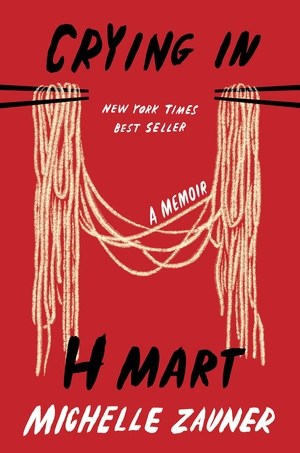
The first book of the year was Michelle Zauner’s Crying in H Mart. It had been on the list for a while and I’m glad I finally got to it.
It’s rare, I think, to read a memoir or biography of a musician like Zauner this early in their career. By that I mean, there are untold numbers of books written about musicians but they’re written about people who are or were already famous. There’s something special about this book showing the creative process that emerges from a young artist encountering immense grief in real time while still trying to figure out what her art is, and how it looks as a vocation.
This book also made me very hungry, which wasn’t totally surprising given the title. Learning to cook, and then cooking, Korean food was a big part of this book and how Zauner connected to her mother and her heritage. These scenes brought back a lot of memories from our own time in Korea, the food we ate and the places we ate it: Kalguksu (knife cut noodles) and seafood by the beach in Incheon. Myeongdong Gyoja. Galbi prepared table-side. Jjigae. Endless banchan and kimchi. Street food on the crowded streets of Hongdae. All of it and so much more textured this book.
I did something I’ve maybe never done before this year: I read an entire series in the same year. Normally I try to spread out a series a bit more, to savor the books and stay engaged with the characters. But this year I read Hugh Howey’s Silo series with only about a month between the books.
I also joined The StoryGraph this year. It’s a Goodreads alternative that is independent of Amazon and, so far, has a lot less review bombing and competition for my attention. It reminds me of what Goodreads was back in the early days. You can follow me there if you want.
Wool, Shift, and Dust: Hugh Howey
I enjoyed this series and I’m glad Apple TV took the time to make the show and improve on a few things. Like a lot of science fiction, I suppose, the characters in Howey’s world are subordinate to the idea propelling the story. In this case, the circumstances and technical detail are well fleshed out into impressive detail. The twists and turns of how exactly people came to live in this silo are fascinating and Howey has a clever way of letting you forget details only to be reminded of them entire books later. The suspense and mystery of the whole world is compelling and had me tearing through these rather long books very quickly.
The Apple TV series improves on a lot of the human elements. Character motivations are more transparent, and the social dynamics more complete. In short, I recommend both!
Little Eyes, Samanta Schweblin
My first encounter with Schweblin and her translator Megan McDowell was Schweblin’s first English release, Fever Dream. I still think about that book often and I suspect Little Eyes will be no different. In its original Spanish, the book is called Kentukis, for the cute little digital friends that are the main characters of the book. They’re sort of like the robots you might see in a movie like Mitchells vs. the Machines or Rashida Jones’s companion in the show Sunny (which I quite enjoyed).
The difference in this book is that these bots are more like pets than friends or helpers, and they’re driven not autonomously, but anonymously: by individual operators you’ll never meet, but who will get to know plenty about you. It’s a fascinating and haunting meditation on surveillance, voyeurism, and anonymity.
A lot of journalists and public intellectuals spill a lot of digital ink these days trying to decipher what AI means for capitalism, the web, and different industries at the intersection of both. An important conversation to have. Here, Schweblin sort of skips all that and understands that people still want something to do, and imagines a fairly logical conclusion for what we’ll do with technology we basically have, how it will liberate us, and how it could imprison us. It’s prescient, creepy, suspenseful and, at times, tragic.
I’m now waiting in horror for Meta to “invent” the Kentuki IRL and convince whole swaths of the world it’s something we need. Go read this book first so you can prepare. Meanwhile, I’ll be digging into Mouthful of Birds.
All Fours, Miranda July
Where to even start with this one. It’s really hard to describe All Fours without spoiling it. Here’s Wikipedia’s attempt:
The novel follows a 45-year-old perimenopausal woman who, after having an extramarital affair during a road trip, has a sexual awakening.
It’s accurate, I suppose, but every word of that pithy summary is doing a lot of work. As my friend Joe put it: it is more and less than what actually happens in the book.
Storygraph’s summay says:
A semifamous artist announces her plan to drive cross-country, from LA to New York. Twenty minutes after leaving her husband and child at home, she spontaneously exits the freeway, beds down in a nondescript motel, and immerses herself in a temporary reinvention that turns out to be the start of an entirely different journey.
Also true. Also not giving the thrill of this book enough credit because as Danielle put it: It’s an impossible book to describe.
So I’m going to instead admonish anybody who might actually read this blog (thanks!) to go read the book. If you like unreliable narrators, messy characters, or just a fun romp through an author’s mind, this is for you. It’s quite a trip.
Interior Chinatown, Charles Yu
This one has been on my list for ages and I’m glad I finally got around to reading it. It’s another book that is difficult to describe without spoiling it. Willis Wu is a delightfully complicated character, trapped and limited by his own understanding of what’s possible as much as he is the real constraints and stereotypes he needs to escape. I loved every page.
There was also a TV adaptation of this book for Hulu. It took the characters in a bit different of a direction, and I enjoyed that as well.
Goodbye Vitamin, Rachel Khong
I think I actually read this book in 2024 but maybe it was early 2025.
Khong takes a topic that refuses to be funny and entertaining — the long death that is Alzheimer’s Disease — and accomplishes both while honoring the tragedy of the experience of living with and suffering from the condition as well. It’s one of those books that can make you laugh and cry on the same page. The family dynamics are well drawn as were the conflicts among and within each character.
Plus, you’ll never see endives at the grocery store without exclaiming “ohn-deevs!” in your head (or, maybe aloud).
Belonging, Norah Krug
Norah Krug is a German-American. She was born in Karlsruhe and grew up there in the late 1970s and 80s. As she aged into adolescence and adulthood she began to realize that being a German in the late 20th Century was complicated by War II. When she moved to New York, her accent gave her away. Eventually, she began a relentless pursuit of understanding her family’s relationship with the Jewish community in Karlsruhe and the extent to which any of them were complicit in the Nazi party’s atrocities, and how it shapes the meaning of “heimat,” homeland.
I loved this illustrated memoir (graphic memoir?) so much. I remember learning in middle school German class that the word heimat was complicated. Something to do with the war, nationalism, and a weaponization of the idea of a homeland by the Nazis. If I’m honest, it didn’t really connect with my 7th grade mind. In 2002 (when American flags flew in multiples from most windows at home) I remember asking my Bavarian host family why nobody in Germany flew a flag. Because of the war, they said, as if they shouldn’t need to elaborate further. This book brings all of that ambiguous discomfort together. It describes how the shame of the past still makes calling Germany a heimat uncomfortable, and how to reconcile feeling and history with calling the place and culture a kind of home.
Get this book. Give yourself time to read it and plan some walks in the woods to reflect on it, with a dog if you have one.
Flight Behavior, Barbara Kingsolver
I false started this book once a couple years ago and it’s since sat on our bookshelf staring me down. I just couldn’t get into it the first time I tried. I almost gave up again this time around, too. It’s a slow burn at first with maybe too much establishment in the first hundred pages. After that, though, the book takes of with the familiar Kingsolver richness.
The level of detail she puts into describing the methods, tools, and settings of Dellarobia’s home, community and the occupations of both sheep farming and entomology is incredible. In particular, the parts focused on the work of lepidopterists working in the field read like an ethnography set to prose.
As with many of her other works, she also has some keen observations about poverty and privilege in Flight Behavior. She sharply contrasts the high tech lifestyles of the scientists and college students with the sheep farmers in Dellarobia’s family, who can scarcely afford to keep the land, equipment, and animals they need to earn their living, and live in circumstances designed to trap them in that poverty. Some critics may say she over did it, but I think she handled it with the appropriate humanity and rigor.
Barbara Kingsolver remains one of my favorite writers, and I am glad this was the book I ended the year on. I look forward to reading one of her other books in 2026. Maybe Lacuna? Demon Copperhead?
A few years ago I deleted my Facebook account. Not deactivated. Deleted. Lost all my friends, posts, history, etc. (I took a backup first.) I only signed back in a couple years ago to use Facebook Marketplace to sell things. Anyway, I have a few “friends” (some are actual friends) now but the algorithm is remarkably bad compared to what I remember it being in 2008 or even 2018 when I deleted.
I signed in recently, here’s a list of the first 19 posts. Assume any groups listed are not ones I follow unless otherwise indicated.
Post from my wife’s aunt
Cycling group
Thirst trap reels
Baby products group
Wildlife group
Catholic memes group (?)
Cringeworthy neighborhood group I do follow (sometimes under duress)
“Mindset space” group(?)
A genuine post from someone I actually know!
Post from the same aunt
Post from one of my wife’s cousins
Post from someone I actually know!
Post from someone I actually know!
Post from someone I actually know!
Container construction group
Packers group
“Underground on top” group (?)
Environmental group
Thirst trap post group
I really feel like I remember there being more genuine people around there. This stuff must be really compelling but I generally won’t scroll this long to see something useful.
I love my Pi Zero. It’s such a tidy micro-server to have in our house for random things. When we first got it, it was a pi-hole. We deployed it for the same purpose in the office we shared with our friend and neighbor. There, with a little display, it also helped our officemate debug network problems by displaying information without color. It’s so small and low, I powered it off the usb port on the back of the wireless router.
Someone should time-travel back to 2003 and tell my younger self that not only is it possible to have a home server that’s on all the time, it’s also small enough to lose in a junk drawer.
At some point, though, it stopped working reliably. I’d plug it in, and after a while it would crash mysteriously. I checked the logs and noticed it was kernel panicking, not hanging on any particular application or task. The panics would happen reliably when I ran apt upgrade but I couldn’t work out much more befond that.
Last weekend, inspired by a friend’s Zero 2, I thought I’d try to figure it out again. I’ve learned a lot about Debian, SD cards, and how to optimize long running pis in the last year or so. Maybe I just didn’t know what to do in the past.
It turns out the most important thing I had to do was overclock the CPU by a small amount. In /boot/firmware/config.txt I set over_voltage: 2, to give the CPU the ability to use 1.355V instead of the standard 1.35V. (vcgencmd suggests it’s actually 1.400 so ymmv, I guess.)
I’m not sure why this worked, but it hasn’t panicked since.
A few other things I did before I started programming the GPIO e-ink display:
Uninstalled the NVIDIA and Intel GPU firmware packages.
I linked to Chris Dzombak’s blog a few times above. There’s a lot more I could do to help this lil pi keep itself stable in the long term and I’ll probably keep tweaking based on his excellent Raspberry Pi series. Worth checking out before you burn through an SDXC card.
The important thing about 18F is that it was a dream.
Last weekend, 18F, the office I worked for at the US General Services Administration, was eliminated. All 100 or so individuals on staff were fired at midnight (12:02 to be precise) Saturday morning.
18F was a place where people worked. Those people helped other people do their work better. Sometimes they helped large groups of people save money. Some of those people worked to help small groups of people with impossible or herculean jobs. But the important thing about 18F is that it was a dream.
Often, 18F helped people focus on outcomes when the system wanted them to focus on check boxes. (It was also a place to learn that sometimes you have to find a way to do both.) 18F was a place that made a positive difference in how people in the federal government delivered to the public. But the important thing about 18F is that it was a dream.
The people who worked there had the courage to believe in the beauty of the dream. Their customers did too. So did their peers. And so did the giants on whose shoulders 18F stood. Dreams only work if people believe in them. So, the important thing about 18F is that it was a dream.
The future will not belong to the cynics. The future will belong to those who have passion and are willing to work hard to make our country better. The future will belong to those who believe in the beauty of their dreams.